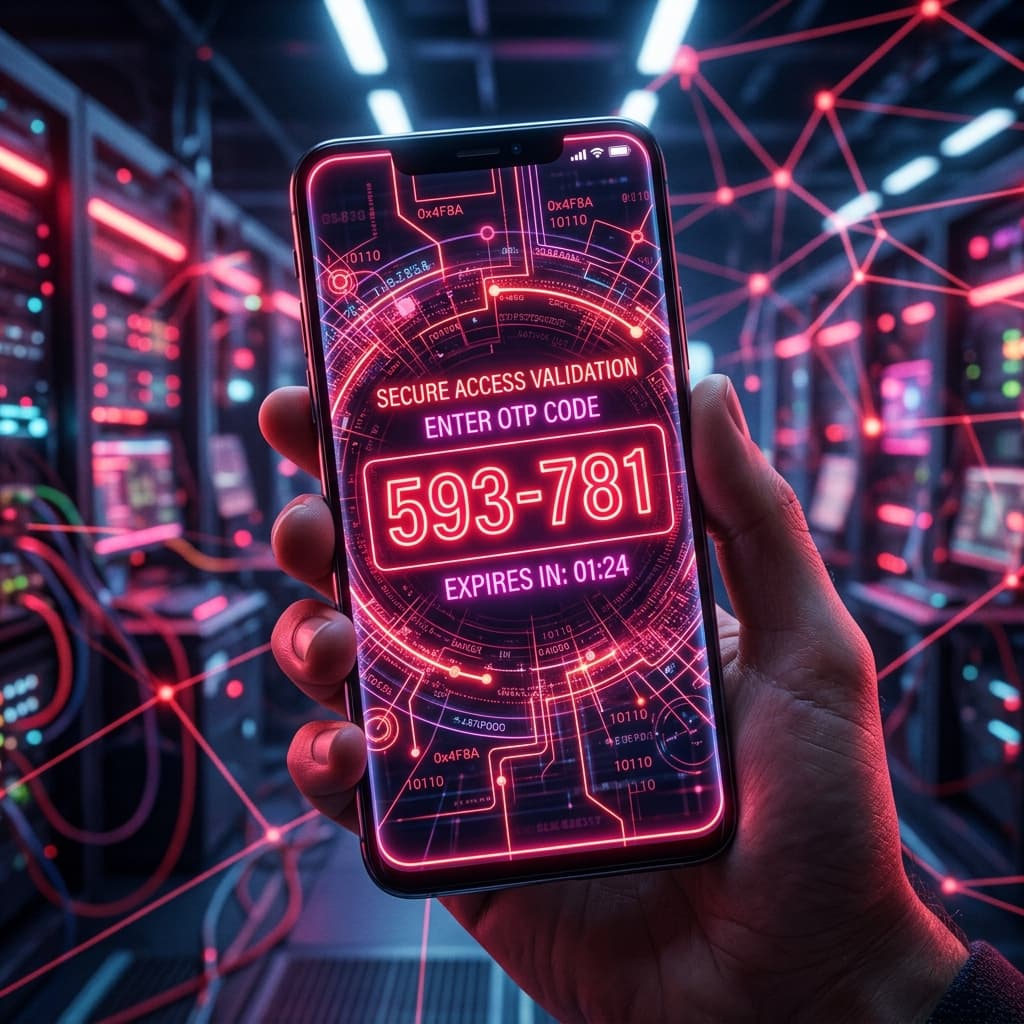
Email addresses were once the primary identifier for online accounts. Today, phone numbers have become equally central to digital identity — and in many cases, even more sensitive. Nearly every major online platform now requires a phone number during registration or account recovery: WhatsApp, Telegram, Discord, Google, Apple, Stripe, Coinbase, ChatGPT, and hundreds of other services insist on SMS OTP verification as part of their security and anti-fraud measures. This requirement creates a significant and underappreciated privacy risk: your phone number is one of the most powerful identifiers in existence, directly linked to your physical SIM card, government ID, residential address, and financial records.
Unlike email addresses — which can be created freely and abandoned easily — phone numbers are bound to physical cellular contracts and carrier records. Providing your real number to a web service creates a permanent, traceable link between your offline identity and your online accounts. Virtual temporary phone numbers offer a way to complete SMS verification while keeping your real number completely private.
Privacy Risk:The FTC's 2024 Consumer Sentinel data shows that identity theft reports involving phone number fraud have increased by over 60% since 2021. Protecting your real phone number from unnecessary disclosure is one of the most impactful privacy steps available.
The Hidden Risks of Phone Number Disclosure
When you provide your real phone number to a web service, several data pathways open immediately. Most platforms store your number in plaintext or with reversible hashing in their user databases — making it recoverable in a breach. Advertising platforms like Meta and Google offer "Customer Match" products that allow advertisers to upload phone number lists and target specific users across their ad networks. If the service you registered with sells or shares its user database, your phone number may be used to profile you for targeted advertising without your knowledge.
More critically, your phone number is the recovery method for most online accounts. If it falls into the wrong hands, it can be used to initiate SIM-swapping attacks — convincing your carrier to transfer your number to a hacker-controlled SIM card — effectively granting them access to every account that uses SMS-based two-factor authentication.
VoIP vs. SIM-Carrier Routing: Why It Matters
Many virtual phone number services use Voice-over-IP (VoIP) technology to provision numbers. VoIP numbers are software-based lines that route through internet infrastructure rather than traditional cellular networks. While VoIP is cost-effective for providers, it creates a significant compatibility problem: most major platforms have implemented sophisticated number validation systems that automatically detect and reject VoIP-prefix number ranges.
WhatsApp, for example, checks number prefixes against carrier databases and VoIP registries in real time during the verification process. Discord, Stripe, and Coinbase use similar detection systems to prevent bot registrations. A VoIP number will trigger an immediate registration failure on these platforms, making it useless for OTP verification.
TempNova addresses this by routing all virtual numbers through physical SIM-carrier gateways — real mobile network infrastructure connected to actual SIM cards in multiple countries. These numbers present to receiving platforms exactly as standard mobile phone connections, with legitimate carrier metadata, real prefix structures, and valid network registration signals. This dramatically increases compatibility with strict verification systems compared to VoIP alternatives.
How TempNova's Temporary SMS Service Works Step by Step
- Select Your Country: Open the TempNova SMS dashboard and choose from the available country pool. Numbers from the US, UK, Germany, France, Canada, India, Brazil, and more are available.
- Generate the Number: Click "Generate Number" to allocate a real phone number from TempNova's carrier pool and assign it to your browser session.
- Use for Verification: Copy the number and enter it into any registration form. Submit the form to trigger the platform to send its OTP via SMS to that number.
- Receive in Real Time: TempNova's dashboard polls the carrier gateway every few seconds. The incoming SMS message appears on your dashboard almost immediately, with the OTP code automatically highlighted for one-click copying.
- Release When Done: Once verification is complete, click "Release" to permanently destroy the number from your session. It cannot be reused by you or accessed by anyone else.
Protecting Yourself from Smishing and Telemarketing
Beyond protecting your number from being added to marketing databases, virtual phone numbers also shield you from SMS phishing (smishing) campaigns. Smishing attacks involve SMS messages that impersonate banks, delivery services, or government agencies to trick you into clicking malicious links or entering credentials. By using a TempNova number for registrations, your real number remains unknown to the platforms you sign up for — and therefore cannot be used to target you with smishing attacks originating from data breaches on those platforms.
Similarly, telemarketing robots and automated robocall systems often operate from lists purchased from data brokers who aggregate phone numbers from registration databases. Since TempNova numbers are transient and not tied to your real identity, they cannot be added to persistent telemarketing lists. Once released, the number goes back into the carrier pool and any association with your registration session is permanently severed.